Saturday, December 7, 2019

Andrew Carnegie and Vertical Integration

In the time when the steel industry first began in the 1850s and continued to become more recognized and established throughout, there were major players taking control of the field. One of the most renowned people who took the steel industry by storm was Andrew Carnegie.

As a little boy, Carnegie worked in a Pittsburgh cotton factory before he advanced to the position of division superintendent of the Pennsylvania Railroad in 1859. During his journey, he invested in a variety of ventures that included iron and oil companies, making his first fortune. Moreover, at a young age, Carnegie was a striving entrepreneur, but he really became famous when he amassed a fortune in the steel industry. He started his own company called Carnegie Steel, which soon became the most dominant company due to his very notable and clever strategy: vertical Integration. Vertical integration, according to the Strategic CFO, "is the process or a company's domination of every aspect of the production line or process for a particular product. This means that Carnegie bought different types of companies in order to enhance his company's supply chain, allowing him to not have to rely on a middle man to supply them for him. Prices were now able to be cut and opened a doorway for him to completely assert his dominance in the market.

Although, unlike horizontal integration that increases production of goods or services at the same part of the supply chain, vertical integration created so much of an unbalancing domination that was unfair in the steel industry that it is now illegal, being considered a vertical monopoly. It prevented startup companies or small companies from having a slight chance to make a contribution in the market. That is why today, we see more of horizontal integration than vertical integration.

https://strategiccfo.com/vertical-integration/

Image result for vertical integration

Wednesday, November 20, 2019

Alternative Media

Alternative media can be described as the divergent side of Mainstream media. It is media outside of the more dominant and established media, in terms of production, distribution, and content. Now, this category of media comes in many different names, such as anarchist, small, progressive, subversive, etc. Ultimately, the more common name, as said before, is alternative media. It presents itself in many different forms, which includes print, audio, video, Internet, and even street art. Street art was surprising, but it made sense to incorporate as a form due to how it can be expressive in symbolizing or depicting a specific story, opinion, personal matters, or circumstances about issues going on in society. Examples of alternative media are South Front (funded by their readers & supporters), Signs of the Times, and Truthstream media, which was started by a couple to '"find out the truth" about what's really going on. South Front intakes stories dealing with Crisis Events, World Events, and Political surveying. Signs of the Times curates news articles from around the world and post them on their salt.net website. Finally, Truthstream media focuses on historical aspects of news about unveiling hidden issues kind of like some police shows that reenact a criminal event. Looking at the purpose of each of these media sources, we see that they are all different. Alternative media, to sum it up, is where anyone can have a platform from anywhere, whether it's from overseas or in the states in a small city, town, or even the countryside. The big thing is how do we know if a news source is alternative or not.

Determining whether or not a news source is alternative isn't very hard. The answer can be found by asking a series of questions that I thought of: Is it corporate owned? What is its content, meaning is it news that is repressed or misreported news from mainstream media? How is it produced and distributed? And what is the purpose? Is it seeking some kind of political or social change? After asking these questions, you can breakdown the facts of a news source. Also, one key difference between mainstream & alternative media is that mainstream is profit-oriented. Alternative media houses aren't as a means to avoid conflicts of interest in their objectives. They want to make sure they get their point across more than trying to receive something materialistic out of it. However, though it may seem like alternative media is trying to do good things, they still have their pros and they have their cons.

One of the great things about the alternative media sources is that they can have several perspectives of a story. Having multiple perspectives gives you different outlooks on the same situation, giving you views that mainstream media may not show. Another good thing is that censorship is weaker, which allows avenues that mainstream media may not have to offer more information. Lastly, reporting of the information may be faster. You think about the big companies like PBS, TBS, CBS, and NBC. These companies are limited on what they can display and sometimes it takes long to get the information and release depending the process it has to go through, from the bottom all the way up to the head of the company. So this offers a clear advantage for alternative. However, though there are a few great positives, we have to still meticulously pay attention to the negatives of alternative media.

After talking about the advantage alternative media had from having weaker censorship, it still can be awful for the audience because of its lack of censorship. Sometimes, depending on the objective of the news source, the information being produced can be horrendous. It may have a bad effect on who may come to read the source and it can be very inappropriate, especially if younger people are a percentage of the viewers who read the sources. After this, even though it is not as important, the production quality can be very poor compared to the quality of mainstream media houses. Going back to the news source South Front, companies similar to them where they continue to run their organization only off of donations from the supporters can quickly become a detrimental problem. Taking into consideration if the organization didn't have enough supporters, it would make everything worse. This condition follows into the con dealing with fewer sources. Since some of these media houses might just be starting or either are small, they are limited in the connections they have to use to gain the information needed.. Ultimately, this follows into the negative where there are fewer filters. Having fewer sources is what causes the problem of fewer filters, which results in "fake news." Also, looking at these sources with a grain of salt, we have to remind ourselves that some of these news sources have more personal bias than bigger mainstream media companies. In the end, we have to always look back at those questions not only to identify a media source to see if its alternative but also to dissect the source to find the truth.
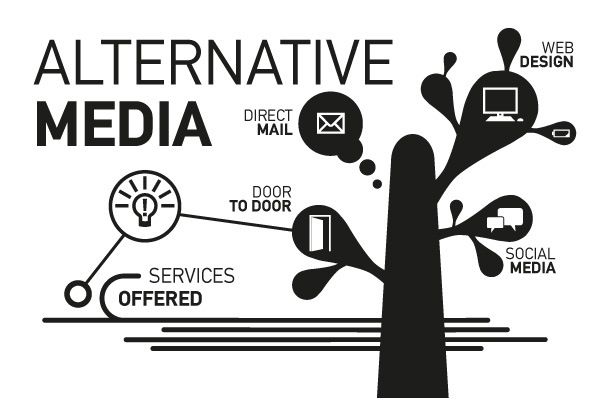
Image result for alternative media

Thursday, November 7, 2019

My Footprint in the Online World

After going through many searches using my nickname, first and last name, and then even including my middle name, I was not able to find any information of myself related to social media. Truly, like my father, I am not the biggest social media guy and really keep things in my own bubble. Although everything I do is not secretive, I don't feel the need to post what I've done online. In specifics, unrelated to social media, I did find sources pointing towards business-related stuff like my linkedin account. In some way, I am totally fine with that because of my reason behind creating that account. I want more exposure and if finding a place where I can be searched for is a benefit for me. However, I also found very, very old information dealing with a Non-Profit organization I use to attend when I was younger. It's kind of weird and uncomfortable knowing that information from almost 10 years ago is still able to be found today. Also, it's linked to a website that I've never heard of, so this information is coming from a second-party. Overall, my presence online is not as bad and I hope to keep it that way.

Thursday, October 31, 2019

Impact of E-Cigarettes

Tobacco has been around for so long, being introduced to Europeans on October 15 in 1492. Along the way, many innovative ideas surrounding tobacco began to arise, one huge idea being cigarettes. Cigarettes, or the first commercial cigarettes, were created in 1865 by Washington Duke, a well-known American tobacco Industrialist, on his farm in Raleigh, North Carolina. However, not until around 1881 did cigarettes become widespread due to the cigarette-making machine that American inventor James Bonsack created. Overtime, people wanted to modernize the cigarettes by developing nicotine aerosol devices before 1963 in China.

The first reference of these devices was by Joseph Robinson in 1927. In time, this lead to the invention of what we know today as e-cigarettes, which was invented in 2003 by Hon Lik, a Chinese Pharmacist. His purpose for creating the e-cigarette was to provide a safer and harmless method of smoking by using hot, moist, and flavored air as a way to replace the burning tobacco and the paper. In the beginning, the electronic cigarettes were meant only for current cigarette smokers. But the early adopters of the product were teens, which translated into approximately 1.3 million additional adolescents who vaped in 2018 according to the National Institutes of Health (NIH). Surprisingly, people who already smoked cigarettes were the late majority and late adopters in receiving the ideas. The tipping point is when the popularity of vapes, which are the flavored electronic smoking devices, came into the picture and began to grow. It has been around since 1963, but it has really sky-rocketed more than ever. Now today, the only people who would not even think about using a e-cigarettes are non-smokers who are older. They had more sense of the problematic outbreak that e-cigarettes would have and that's why they've stayed away from it.

https://www.nih.gov/news-events/news-releases/teens-using-vaping-devices-record-numbers
http://www.casaa.org/historical-timeline-of-electronic-cigarettes/

Image result for e-cigarettes

Thursday, October 10, 2019

Printing Press

Technology has been a critical part of life throughout many, many centuries. One of them that has made a big impact in world, continuing on even today, is the printing press. The printing press is a device that allows mass production of uniform printed matter. It applies pressure to an inked surface that rests upon a print medium. Knowing what the device does, the only unknown problem is that no one knows who invented the printing press or when it was invented. The oldest known printed text known to date was originated in China during the first millennium. The name of this book is The Diamond Sutra made in Dunhuang, China around 868 AD. From this point on, the idea of a printing press didn't fade away, but it did not spread either. However, in 1297, a guy by the name of Wang Chen began to transform the printing press by devising a process to make the wood more durable and precise. During this process, he also made a revolving table that helped the typesetters organize with more efficiency and greater speeds. From this time, the printing press spread to Europe where a goldsmith and inventor by the name of Johannes Gutenburg was experimenting with the technology. Gutenburg changed the printing press by replacing the wood with metal and printing blocks, with revolutionized the printing press, creating the European version. In the late 1400s, printing press began to spread rapidly throughout Germany, Italy, Valencia, Barcelona, and even becoming worldwide. The biggest factor of the printing press is that formalizing it has made it one of greatest contributors to the growth of literacy, education, and far-reaching availability of uniform information for ordinary people.

N.J. Teacher Reassigned after Kneeling during Pledge of Allegiance

The Pledge of Allegiance has been a very controversial issue concerning schools. In Cumberland County, New Jersey, an issue related to the Pledge of Allegiance occurred at a school called Sgt. Dominick Pilla Middle School. A teacher, not identified, took a kneel while the Pledge of Allegiance was being recited. This was brought up in a school board meeting where some community members decided to express their feelings about the issue. Janelle Griffith, a breaking news reporter for NBC News, reported that one of the parents said "the teacher's action was 'reprehensible'." The district's executive director of personnel, Joseph Rossi, "said the principal 'reassigned homeroom oversight so the teacher would have alternate duties during opening annoucements." No one knows the reasons behind the teacher's actions, but the problem, as of now, has been resolved.

Understanding the freedom of speech, this may have been a way of representing that in the teacher's way. We all have a specific way of expressing ourselves or issues that we want to address. They may be under the same category, but the way of expression will never be the same. It describes who we are as people and how we are all unique. Despite the action, we have to look at what the meaning is, though in this case we don't. However, we just have to hope it was for a reason that represents something good.

https://www.nbcnews.com/news/us-news/n-j-teacher-who-kneeled-during-pledge-allegiance-reassigned-n1064661

Vaping Illness Epidemic

In the past few years, what we know as vaping, which was to be a replacement for cigarettes, has become a daily practical thing for teens today. It has become more addictive over the years and now is taking a toll on many people's lives. Erika Edwards, professor of Ecology and Evolutionary Biology wrote about vaping in an article on NBC. She started to explain how lung illnesses have become tied to vaping. Vaping is getting so bad that according to the Centers for Disease Control and Prevention, there have been 1,299 cases in 49 states relating to lung illnesses. What is worst is that 70 percent are male, 80 percent being under 35, and 76 percent of the patients report THC vaping as written by Edwards. The main reason why it has become an addiction for young people, based on addiction experts, is because of the flavors, which hooks them on the nicotine in the first place.

Being a college student, I can say that the main reason why vaping is so popular is because of the flavors. Also, it is the need for people to fit in with the current trend. So many times, young people see things that look fun and there drawn to follow what the crowd is doing. Vaping has become the popular trend and now it is becoming a very serious issue. Today, is doesn't seem like the trend with slow down, nor does the issues dealing with lung illnesses.

https://www.nbcnews.com/health/vaping/vaping-illness-epidemic-shows-no-sign-slowing-n1064546